

Club
What Messi Can Teach Us About Belonging
7th October 2026
From football legends on Scottish soil to the thousands of people who call themselves Braves, we explore what makes football capable of connecting people across generations, communities and continents...
On Tuesday night in Buenos Aires, football said goodbye to Lionel Messi. More than 85,000 people filled the Estadio Monumental to watch Argentina’s number 10 pull on the famous blue and white stripes for the final time. There was a goal, two assists and a 3–0 victory over Benin, but by the time the final whistle came, the score almost felt irrelevant. This was about saying thank you.
After 21 years, 208 appearances and 126 goals for his country, Messi’s Argentina career had reached its final chapter. He leaves as Argentina’s most-capped player and record goalscorer, having helped deliver two Copa América titles and the World Cup.
For years, Argentina asked Messi to deliver. On Tuesday, it simply came to say: gracias.
And that got us thinking about what makes football special in the first place...
More than a shirt
Football has a funny way of making a piece of fabric mean something much bigger than itself. The Argentina shirt represents generations of players, supporters, memories, victories and heartbreak. Messi didn’t create that meaning, but over two decades he became one of the biggest parts of its story.
That is why his farewell felt so significant. People weren’t simply saying goodbye to a footballer. They were saying goodbye to a part of their own lives. For the supporters in the Monumental, Messi has been there through World Cups, Copa Américas, late nights, celebrations, disappointments and everything in between. His goals became their memories. His victories became their celebrations. His shirt became something they shared.
And perhaps that is the greatest thing football can give us: a sense that something belongs to all of us.
From Buenos Aires to Scotland
That feeling isn’t unique to Argentina. In fact, Scotland has a long history of welcoming some of the greatest names in football.
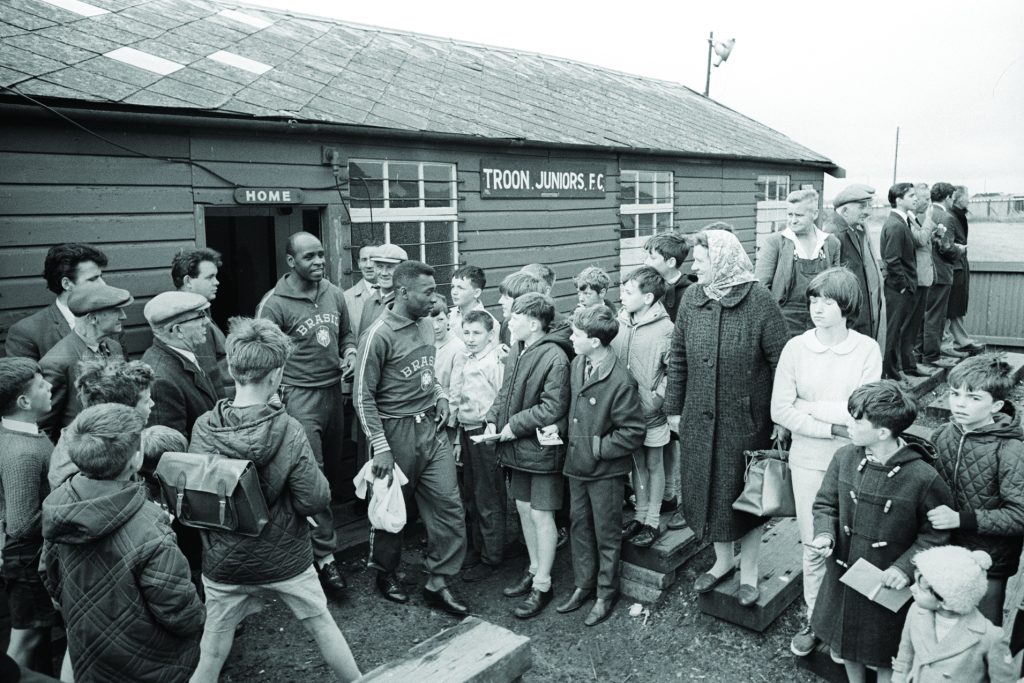
In 1966, Brazil arrived in Scotland as reigning world champions ahead of the World Cup in England. Among them was Pelé. The Brazilian squad stayed at the Marine Hotel in Troon and trained at Portland Park, the home of Troon Football Club, before heading to Hampden to face Scotland in a World Cup warm-up friendly. The game finished 1–1, with Stevie Chalmers putting Scotland ahead before Brazil equalised. Pelé had spent time in Troon, Scotland had shared a pitch with one of football’s greatest-ever players, and another small piece of football history had been written on Scottish soil.
Almost two decades later, Diego Maradona would score his first Argentina goal in Glasgow, before returning to Hampden in 2008 as Argentina manager. Messi was meant to be there that night too, but wasn’t allowed to play, with Barcelona insisting he be rested after representing Argentina at the Beijing Olympics. Argentina still left Hampden with a 1–0 victory.
Pelé made it to Troon. Maradona made his mark in Glasgow. Messi never quite got his chance to play in Scotland. But the stories remain. And that’s the thing about football: you never really know where the next piece of history is going to happen.
That’s where the Braves come in
We’re obviously not Argentina. We don’t have the Monumental, we don’t have 85,000 people filling the stands, and we certainly don’t have Lionel Messi wearing number 10 (although Connor McLaren does have a knack for whipping in free-kicks!).
But we do have something that makes football clubs special: people who feel like they belong.
More than 8,700 owners around the world are part of the Caledonian Braves. Some live close to Alliance Park. Others live thousands of miles away. Some have been with us for years, while others have only recently discovered the club. Some have stood on the terraces and watched us play in person; others follow every result from the other side of the world. They are all part of the same story.
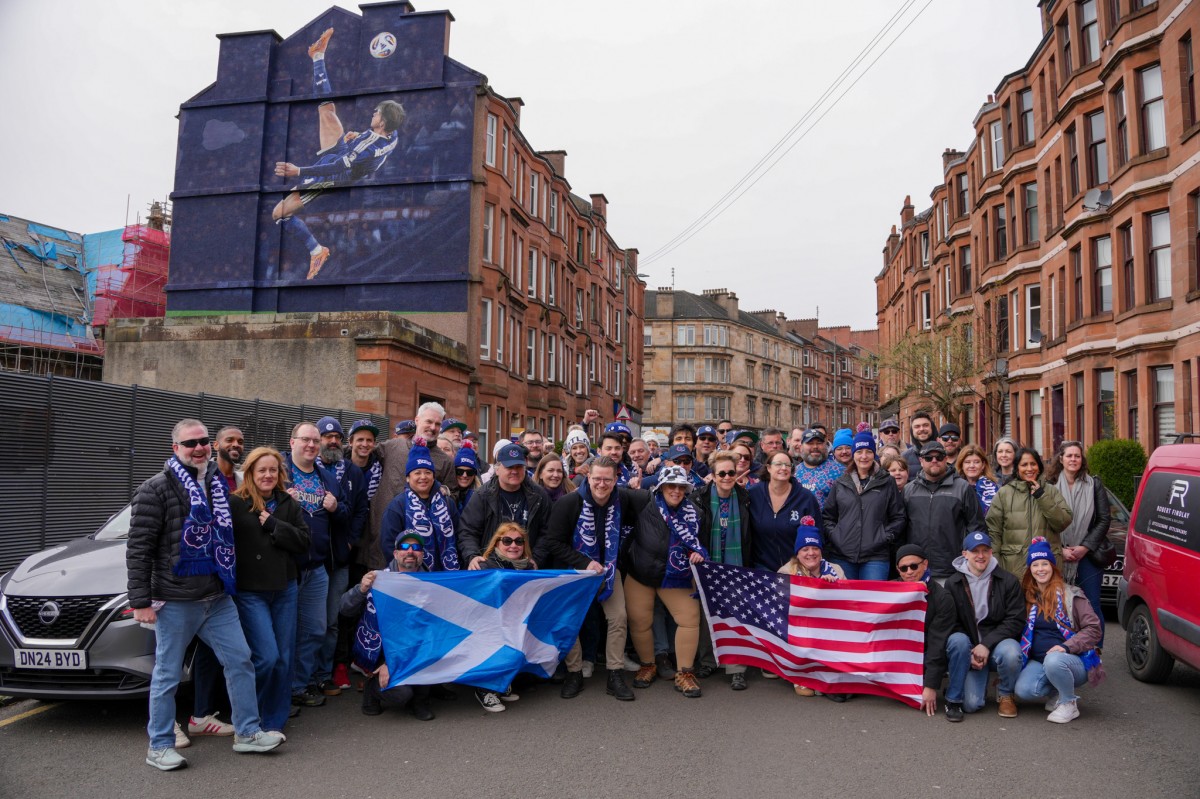
That is what being a Brave means. You don’t have to live around the corner to care about what happens at Alliance Park. You don’t have to have grown up in Glasgow to feel connected to a Scottish football club. And you don’t have to be there every Saturday to be part of the community that surrounds it.
Football has always been very good at making people feel like they belong somewhere. Sometimes that place is a country. Sometimes it’s a city. Sometimes it’s a street, a stadium or a football club. For us, it’s Alliance Park.
And now, Troon
Perhaps that is why the Scottish Cup feels so special. The competition has a habit of bringing clubs, communities and stories together, and soon we'll be heading to Troon in Pelé's footsteps for the next chapter of our own Scottish Cup story.
It is a long way from the Monumental, but that doesn’t mean it is any less important to the people who will be there. Because one day, years from now, the score might become a statistic. The teams might become a line in an old match report. The photographs might sit in an archive. But the people who were there will remember how it felt.
That’s football.
And perhaps that’s what Messi’s farewell reminded us of more than anything. Eventually, the goals become statistics. The trophies become records. The matches disappear into the archive. What remains is how a player, a team or a football club made people feel.
Argentina has spent more than two decades watching Messi create those memories. Now, a new generation of players will create their own. And here at the Braves, we’re doing exactly the same: building something that people can be part of, something that can be followed from Glasgow, from Scotland, from America and from anywhere else in the world.
Because football isn’t just about the 90 minutes. It’s about the people. It’s about the memories. It’s about belonging.
And that’s something worth celebrating, whether you’re standing in Buenos Aires, Troon, Hampden or Alliance Park.
Gracias, Leo. And here’s to the next chapter of football history.